People tend to focus on the turf they can see, but what goes under artificial grass is what decides whether the lawn lasts. In Burlington, where much of the ground is slow-draining Halton clay, the base is the difference between a surface that stays flat and drains for years and one that puddles, ripples, or sinks. A finished install is really a stack of layers: excavated soil at the bottom, a compacted crushed stone sub-base, a weed barrier, the turf itself, and infill on top. This guide walks through each layer and how the process comes together.
What Are the Layers Under Artificial Grass?
Under artificial grass sit four main layers, built from the ground up: prepared sub-grade, a compacted crushed stone base, a weed membrane, and infill worked into the turf. Each one has a job. The sub-grade gives a clean starting point, the stone base carries water and load, the membrane blocks weeds from pushing through, and the infill weights the turf and keeps the blades standing. Miss one and the lawn suffers, which is why a quality install spends most of its time on the parts you will never see once the job is done.
Step One: Excavation and Sub-Grade Prep
The first step is removing the existing surface and grading the soil beneath to a consistent, sloped base. On a typical Burlington yard that means stripping sod or old material to a depth of roughly 75 to 100 millimetres, more for a pet lawn, then shaping the sub-grade so water runs toward a low point rather than sitting in the middle. Because Burlington clay holds moisture, this stage often includes cutting a gentle fall across the area and, on wet lots near the escarpment, adding a drainage channel so the base has somewhere to send water.
Step Two: The Crushed Stone Base
The crushed stone base is the structural heart of the install, and it is where clay-soil yards need the most care. A blend of crushed gravel and stone dust goes down in lifts, gets levelled, and is compacted with a plate compactor until it is firm and true. This layer, usually 75 to 100 millimetres thick once compacted, does three things: it drains water down and away, it spreads foot traffic so the surface will not dent, and it gives the turf a flat plane to sit on. On Burlington's heavier soils we lean toward a coarser, free-draining aggregate so the base does not trap water above the clay.
Why compaction matters
A base that is not properly compacted will settle unevenly over the first winter, and that is when you get low spots and ripples. Good compaction in tight lifts is slow work, but it is the single best guard against a lawn that looks fine in June and sags by the following spring.
Step Three: Weed Barrier and Edging
A weed barrier membrane goes over the compacted base to stop growth from pushing up through the turf. This permeable geotextile lets water pass down while blocking weeds and roots from below. Around the perimeter, a restraint such as bender board, timber, or a paver edge holds everything in place so the base cannot spread and the turf edges stay tucked and secure. On raised beds or against a patio, edging also gives a clean line where the lawn meets hardscape.
Step Four: Turf, Seaming, and Infill
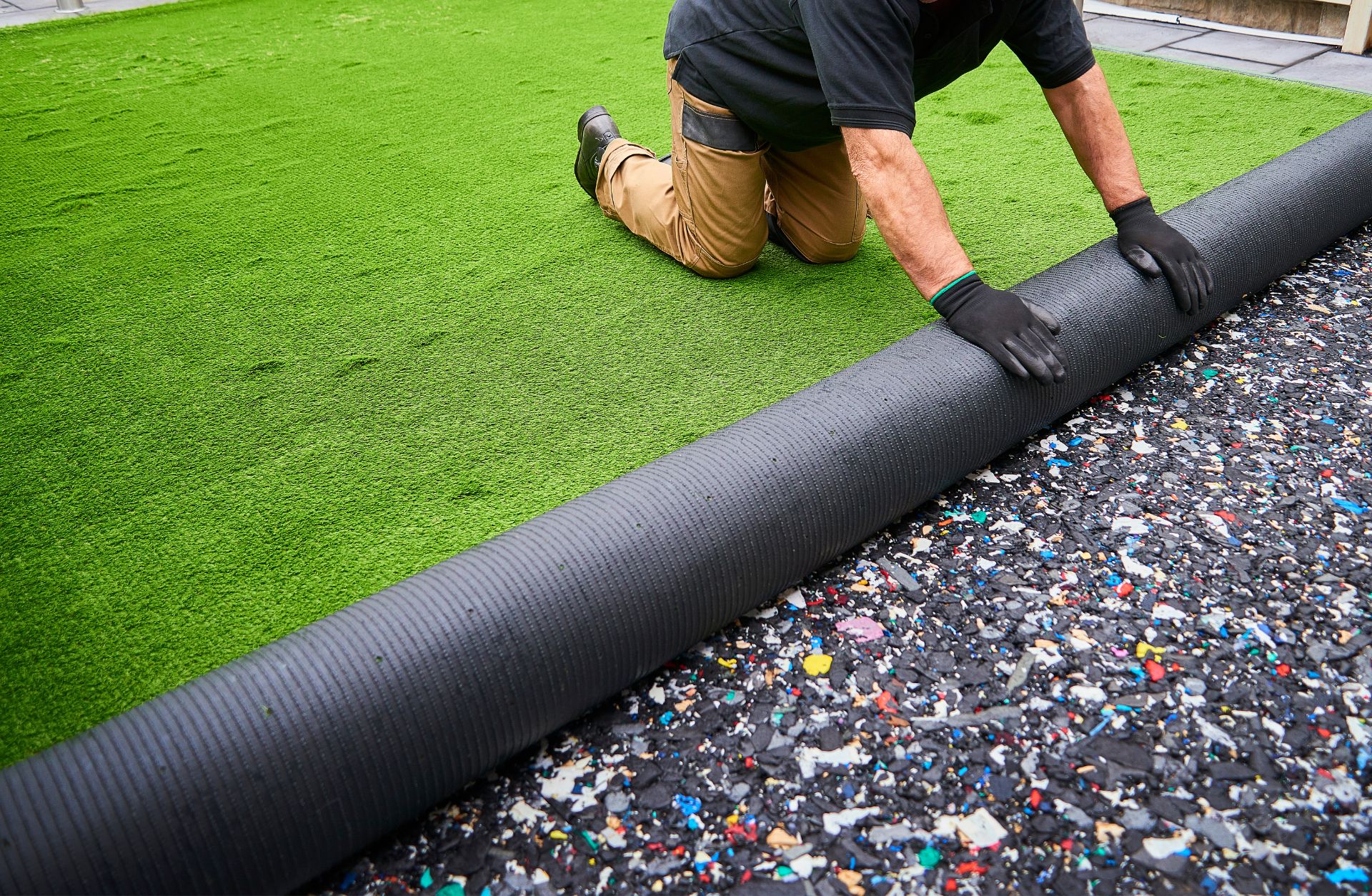
With the base ready, the turf is rolled out, left to relax, then cut, seamed, and fastened. Rolls are laid with the blades all leaning the same direction so the colour reads evenly, joined with seaming tape and adhesive, and secured with galvanized nails around the edges and along seams. Then infill, usually silica sand or a specialty pet infill, is brushed into the fibres. Infill weights the turf so it will not shift, keeps the blades upright for a natural look, and helps the surface stay cool and stable. A final power-brush stands the fibres up and finishes the job. This layered method is exactly how Artificial Grass Burlington builds every lawn, and you can see the same sequence on our process section.
Does the Base Change for Burlington Conditions?
Yes, the base is adjusted for local soil, drainage, and frost. Burlington's freeze-and-thaw winters and clay subsoil mean the base has to both drain well and resist heaving, so a well-built system uses a free-draining aggregate, firm compaction, and proper slope to keep water from freezing in place under the turf. Pet lawns get a deeper, coarser base for faster drainage. Sloped escarpment-side lots may need extra grading or a drainage line. The turf on top is the easy part; matching the base to your yard is where the experience shows.
Frequently Asked Questions
What goes directly under artificial grass?
Directly under the turf sits a compacted crushed stone base topped with a permeable weed barrier. Below that is the graded sub-grade soil, and on top of the turf goes infill. The stone base is what handles drainage and keeps the surface flat.
How deep should the base be for artificial grass in Burlington?
A typical Burlington lawn uses about 75 to 100 millimetres of compacted crushed stone, and pet lawns go deeper for faster drainage. Clay-heavy or sloped yards may need extra depth or a drainage channel to handle water.
Can you install artificial grass over existing grass or soil?
Not directly. Laying turf over live grass or bare soil leads to weeds, uneven settling, and poor drainage. The old surface should be removed, the sub-grade graded, and a compacted stone base built before the turf goes down.